Dreaming of a Better Future
This isn’t a depressing blog post, I promise. It just starts that way.
It’s been hard to maintain optimism about the future, these days. And by “these days,” I do mean anywhere between the last decade and the entirety of the 21st century so far.
Climate catastrophe hits closer to home every day. Fascism continues to tighten its stranglehold on the levers of power, encountering little more than token opposition from those we elect to fight for us. Transphobia and bigotry are written into law, making life demonstrably harder and scarier for absolutely everyone, including cis folks.
(My therapist agrees that it’s normal and rational to be anxious about all of these things, and she’d be mad at you if you aren’t nodding your head knowingly right now. Thank you.)
In an environment like this, it’s hard to even imagine things getting better. Turning back the tide of climate disaster, ejecting the fascist goons from power and holding them accountable for their crimes—these are things that are possible to do, I understand, yet they just… aren’t happening.
Maybe they’re never going to. Maybe things aren’t going to get better.
But what would it look like if they did? Perhaps we could speculate! Fictionally!
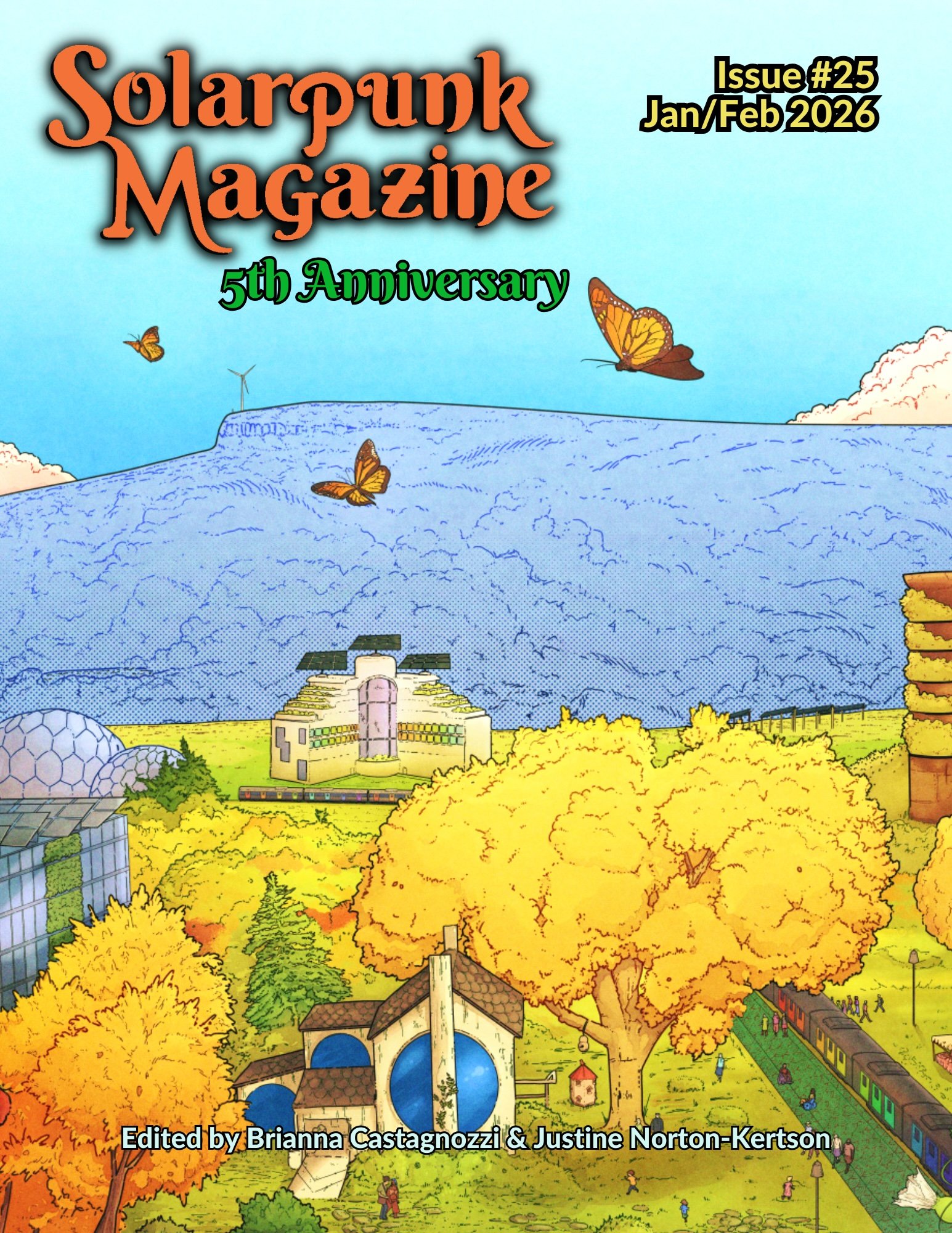
The cover of Solarpunk Magazine #25. Artwork is “Untitled” by Brianna Castagnozzi.
Recently I had a story appear in Solarpunk Magazine #27. It’s a science fiction story I wrote last year titled “Radio Free Luna, Signing Off,” and it follows a trans woman living under an oppressive regime on the moon finding purpose and connection through underground queer activism and the music played on a pirate radio station. I’m immensely proud of this story, and I’m thrilled that it was selected for publication in Solarpunk.
It’s also…not a particularly solarpunk story? Or so I thought at first.
As I understood the term, “solarpunk” refers to a particular flavor of utopian science fiction—that is, stories that depict an ideal future, or at least a better one. Solarpunk stories have settings that feature humanity living in harmonious coexistence with the natural world, in which the oppression and self-destructive greed of our time are no longer driving forces.
I recently read the excellent “A Psalm for the Wild-Built” by Becky Chambers, a novella that I’ve heard upheld as an exemplar of solarpunk fiction. It’s beautiful, cozy, inspiring, and entirely unlike “Radio Free Luna.” Where Chambers’ story depicts breathtaking natural scenery packed with the smells and sounds of the wild, my story takes place in a crowded, airless, miserable city on the lunar surface. Where her story allows for slow exploration of human longing for meaning in a post-scarcity world, mine centers on a struggle for survival beneath the crushing boot of an authoritarian police state.
How can both stories be solarpunk in any meaningful way? I’ve been struggling with that question, and I think I’ve found the answer. As it turns out, I’ve been laboring under an incomplete definition of the term.
One source that’s given me a lot of great information is Demand Utopia, a podcast put out by Solarpunk Magazine. Most episodes of Demand Utopia engage with current events through the lens of a solarpunk political ideology, addressing the ways humanity can dismantle the structures that are driving our planet to extinction. Recent topics covered in the podcast include “Is Regenerative Agriculture the Next Greenwashing Scam?” and “Can a River Have Rights?” In many ways, this podcast operates as a real-world version of the titular pirate radio show depicted in “Radio Free Luna, Signing Off.”
Solarpunk isn’t just utopian science fiction; most of the Star Trek franchise is set in a utopian future, yet I’ve never heard anyone describe Trek as solarpunk. Even if the characters in Trek are (nominally) living in a post-scarcity world without bigotry or avarice, the series are almost always set far from natural ecosystems and heavily center around traditional, military-style hierarchies and institutions. In other words, heavy on the solar, light on the punk.
And maybe that’s where “Radio Free Luna” comes in. The protagonist of my story is a disabled trans woman who spends her days planning and participating in disruptive protest actions to fight for LGBTQ+ rights and thwart the monopolies of colonizing corporations. Her life is not a utopian one, but she struggles to make Luna a better place. Suzy survives thanks to the resilience and solidarity of her fellow queer activists, and she finds the hope and passion to go on in the artistic triumphs that inspired previous generations of queers just like her.
The story is filled with torchbearers from previous eras who help me keep my head up during dark times, right down to the character DJ Candy D, who takes her name from Candy Darling, actor and muse to Andy Warhol and Lou Reed. “Radio Free Luna” is a dark story in many ways, but to me it’s a fantastically hopeful one, carrying the light for other queers to go on fighting to live and thrive even as the world wants us dead.
I suppose solarpunk isn’t just utopian sci-fi with a particular aesthetic vibe. Maybe it’s an expansive enough term to include both utopias that are worth fighting for and stories of the struggle for that better world.
As Solarpunk editor and podcast host Justine Norton-Kertson said in the closing of the May 27 episode of Demand Utopia: “That’s why hope is so important: because without it, how are we going to build a better world? How are we going to change the things that are broken, fix them, and create something better?”
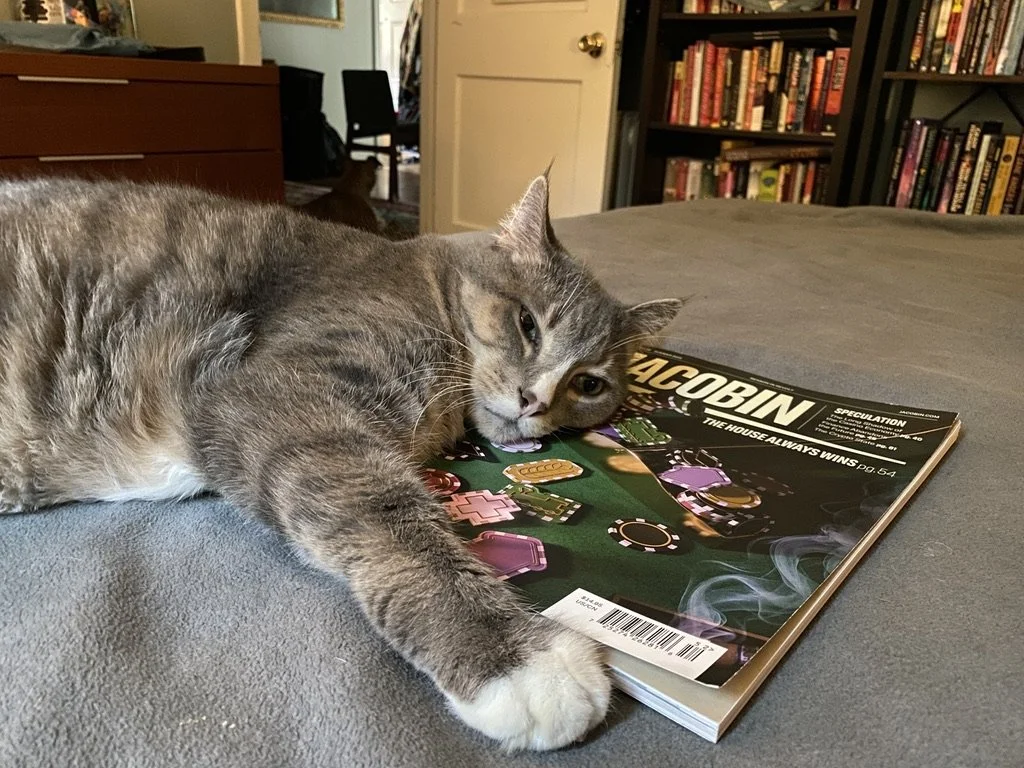
You can’t nap your way out of capitalism, Pocket! Do your reading and let’s get to work!
You can read “Radio Free Luna, Signing Off” right now in Solarpunk Magazine #27 (here’s the link again, in case you don’t feel like scrolling). Or if you’d prefer to listen to Justine’s wonderful narration, they’re producing an audio version for Demand Utopia, due to be released June 3rd. I hope you’ll find a little hope in my story.
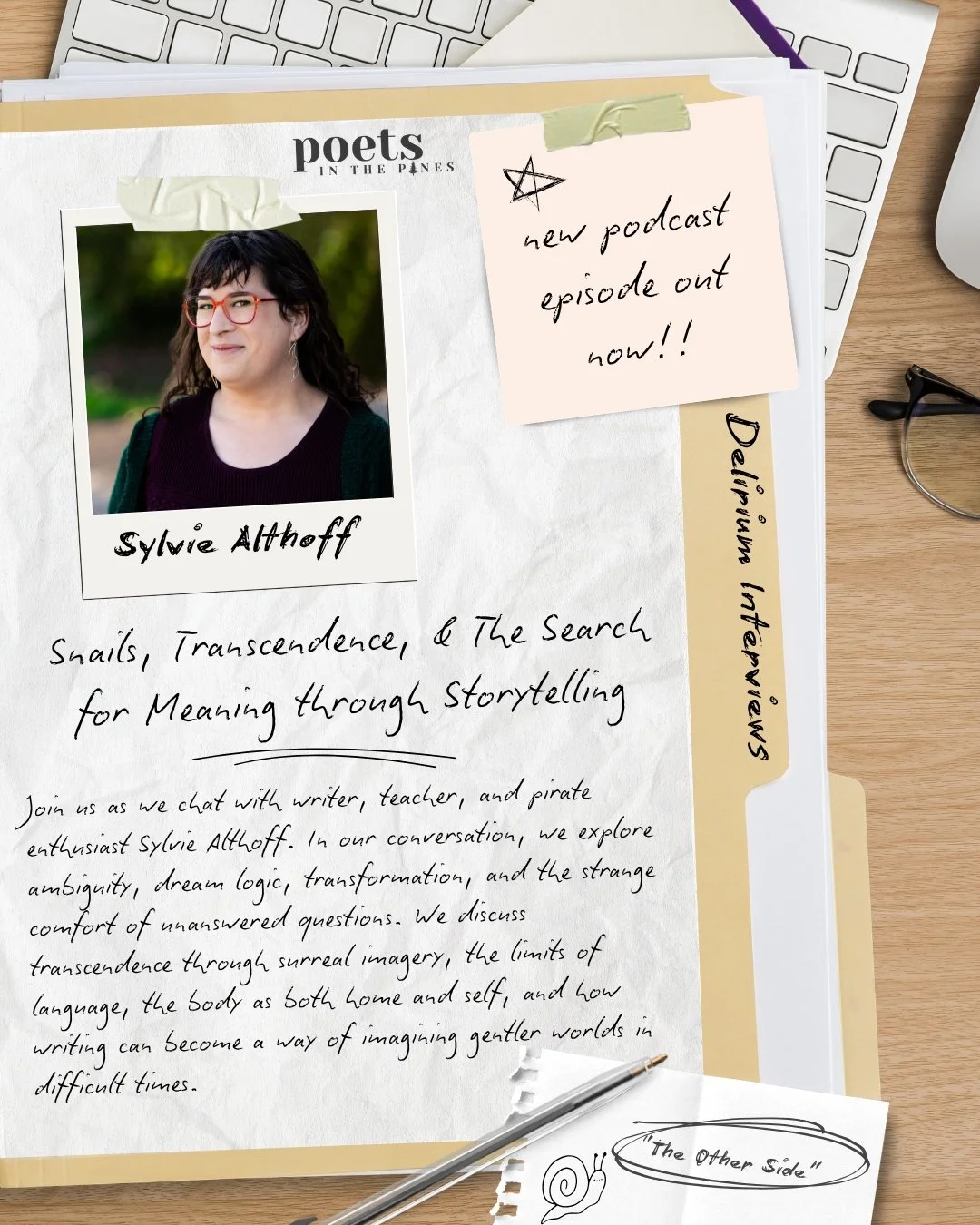
This post has already gone on long enough, but I have to bring up one more thing that’s releasing soon and extremely relevant to imagining a better future. “The Other Side” is a flash piece of mine that will be appearing in Made from Midnight: Delirium, an anthology of poetry and fiction about dreams by Poets in the Pines.
As I discussed in a recent podcast with the editors of the anthology, “The Other Side” imagines a reality beyond our own that’s just as inexplicable, just as full of wonder and mystery, and importantly, exists in a place without time. No hurrying, no scrambling to survive, no time limit on the essential human quests to explore and to be understood. (Note: I am 95% sure “The Other Side” is not solarpunk.)
Sometimes a better world is something we build and fight for with our own blood and sweat. Sometimes it’s a slow moment to admire a cool snail on a tree. No matter what it looks like, no matter how far away it seems, a better world is something worth taking the time to imagine.
And while we’re on the road to that better future, as DJ Candy D reminds us: Stay alive, stay free, comrades.