Solidarity in a Broken World
It started out as a silly little story about robot pirates. It didn’t end there, though.
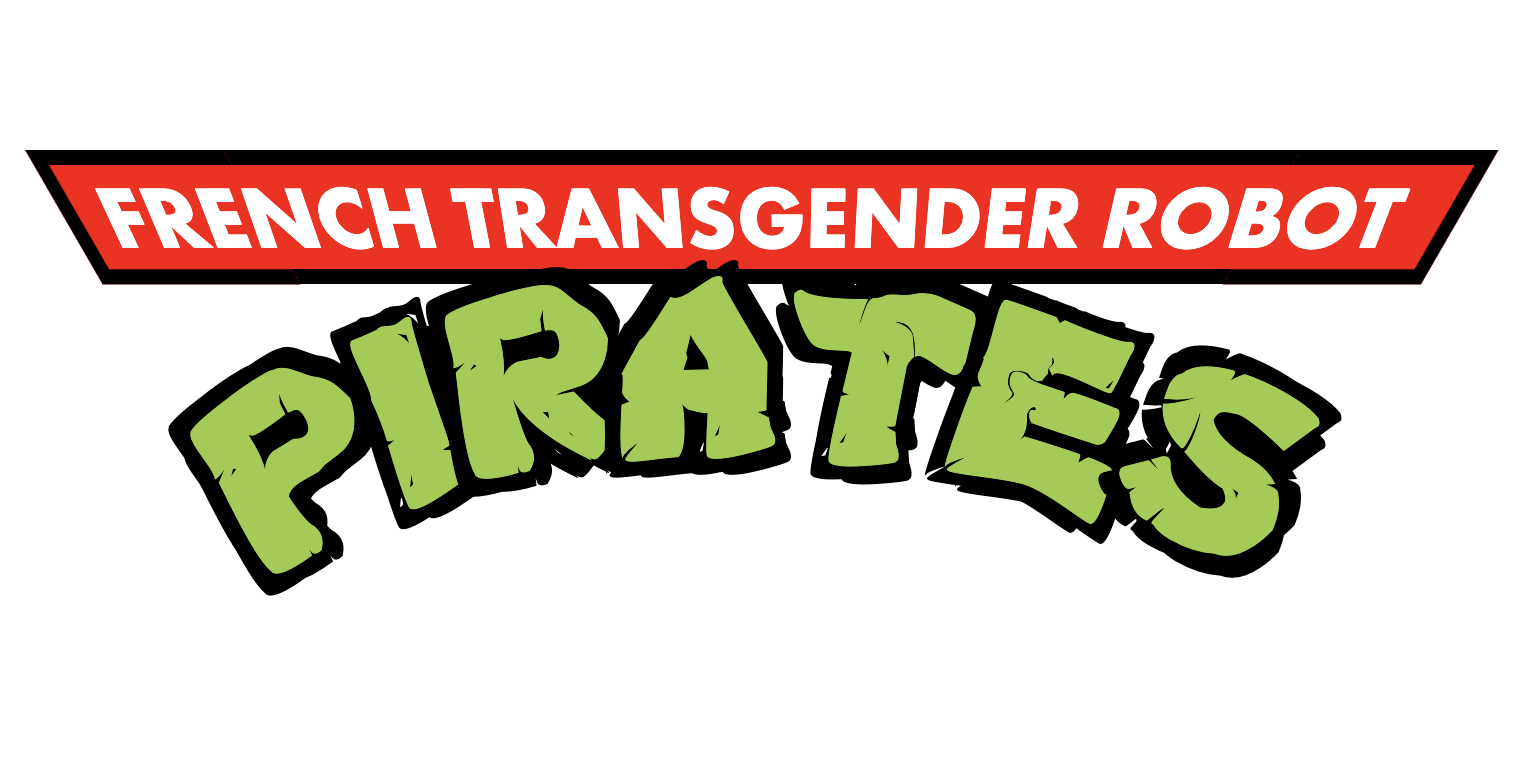
Working title for “Freebooter” (not really). Image made by me using an online tool at http://glench.com/tmnt/.
Last month my sci-fi short story “Freebooter” appeared in the world as Escape Pod #1050. The elevator pitch is pretty much the four words in the TMNT logo, though I frequently add “Marxist” when it doesn’t interrupt the joke. And I’d like to think “Freebooter” delivers what’s on the box: it’s about robot pirates! They have peg legs and hook hands! They call people “lubber” and “lily-livered dog”! There’s a black spot!
It’s a very silly little story. It’s also about the existential fear of being trans under looming authoritarianism, and about the crippling heartbreak of caring for a grouchy, even cruel elder relative. It’s about someone who struggles under oppression trying to provide for her family…and in the process, commits unspeakably brutal acts of dismemberment, sexual assault, and enslavement. It’s about the moral lines we cross to protect ourselves and the ways we dehumanize ourselves by ignoring the humanity of the people around us.
Yes! We’re still talking about the silly little story about robot pirates!
As with a lot of my fiction, this story began as a half-serious fragment in my notes app:
Space robot pirates, pirating selves. Can replicate certain key areas of their software, sold to fences on friendly planets. (Cool idea, but what’s the story?)
This is how most of my projects start out. I’ll write down a wacky kernel of an idea, forget about it, and come back to it later once it’s good and fermented. Not with the answer to “what’s the story”—that’s usually last. First is the silly idea, then the emotional heart, and then the story.
I’m not much for quotations, but there’s a line attributed to Edward Gorey that I have saved in a prominent place on my phone:
“Art…is presumably about some certain thing, but is really always about something else, and it’s no good having one without the other, because if you just have the something it is boring and if you just have the something else it’s irritating.”
The “something” is what it means to be a person in a thoroughly dehumanized world. Robot pirates are the “something else” in this equation, the place where the fun lives. Lingering in human suffering would be boring, or at least depressing; a story about robot pirates with no larger emotional point could quickly become irritating. A meal of nothing but steamed broccoli, or candy for dinner. But put them together and you get magic rock and roll speculative fiction, babyyyyyyy!
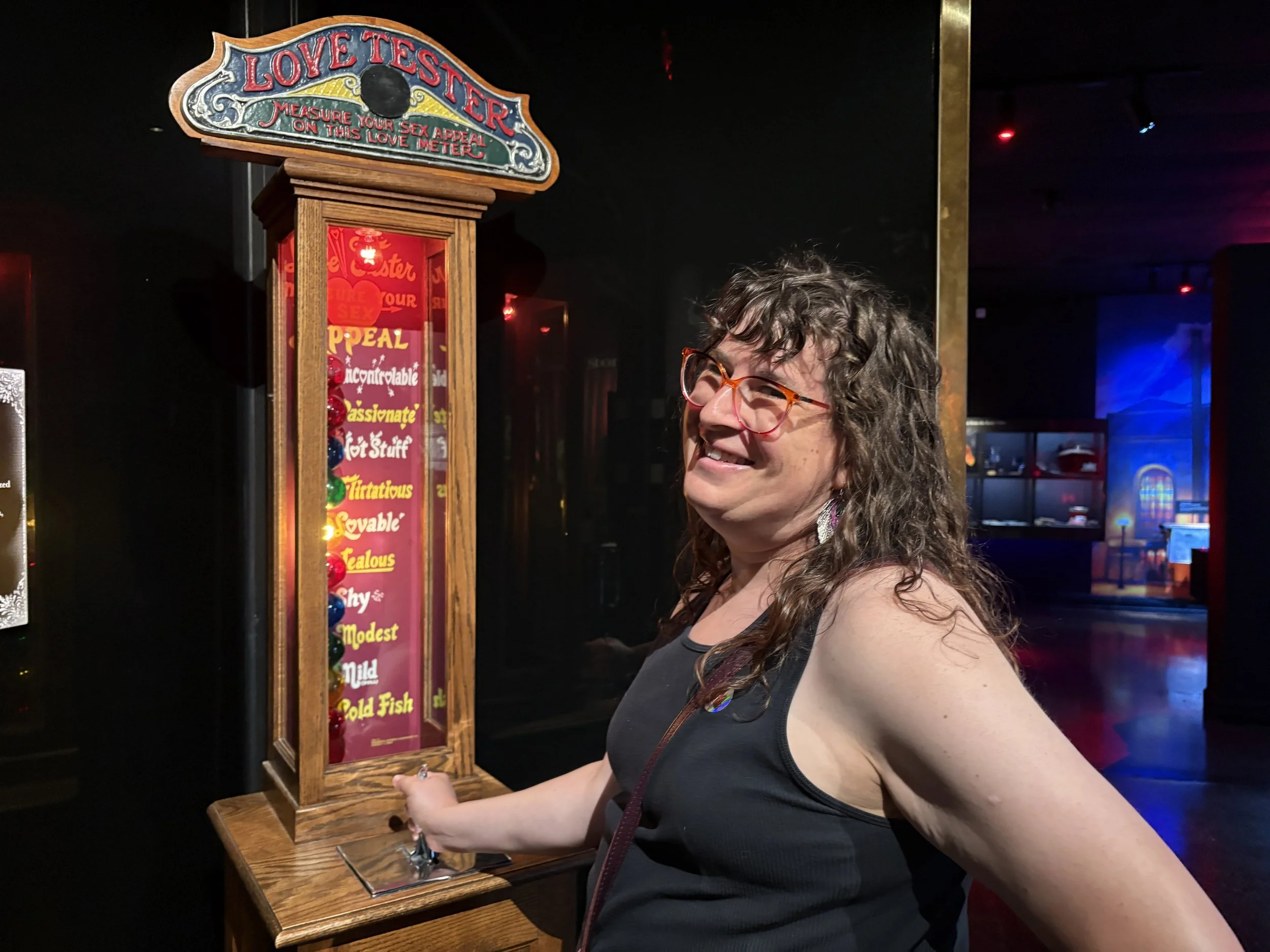
At last, scientific proof that I am deserving of love! Photo taken at the New Orleans Storyville Museum.
To be honest, when I finished “Freebooter,” I was concerned that what I’d written was too arcane to connect with anybody. Not the robot pirates; those are evergreen. But at the heart of this story is a trans woman, suffering from subjugation under the bootheel of a very familiar capitalist death spiral, committing unforgivable acts in the name of caring for her family. That’s an awfully subtle moral message considering we’re at a point in history when “should trans people be allowed to stay alive” is considered a reasonable topic for mainstream debate (looking at you, New York Times).
I’m not interested in writing stories that feature only morally flawless trans characters in the name of delivering “good representation.” All the same, it troubled me that I was bringing into the world the feelings of guilt and shame about my own privilege that live inside my head. Maybe those aren’t feelings that are supposed to be shared with others; maybe those are things to work on with my therapist and keep to myself; maybe I’m the only one who feels like I’m being crushed by the boot and not doing enough to help others who are suffering.
Those anxieties were assuaged in large part thanks to Valerie Valdez, the editor at Escape Pod who took on this story and hosted the podcast episode. Valerie’s editorial notes were hugely helpful in sharpening the emotional point I was making with “Freebooter.” To quote her excellent afterword to the story:
“In times of hardship, we can become laser-focused on survival, on doing whatever it takes to handle our personal responsibilities and duties. We put on our own oxygen masks before turning to help our neighbors with theirs. But sometimes, fear and desperation push us past reasonable self-care. We make small choices that feel essential in the moment, rational, justified, but that take us down a path of oppression rather than liberation. Some of the steps we take on that path to oppression begin with self-interest, a craving for safety or relief from burdens of care for immediate family and friends, and along the way we shed our moral compunctions one by one like pieces of clothing, until all we’re left with is naked injustice. Ultimately, our histories and intentions matter less than the outcomes we bring about through our actions.”
It’s a delicate point, to be sure. In the broken world that we live in (just as much as the fictional world of “Freebooter”), it becomes easy to rationalize almost anything as self-care, self-defense, survival. This story is a reminder to hold myself to a higher standard than that. It’s a reminder a lot of us can use, these days and in whatever days are yet to come.
Be kind. Show solidarity with your fellow humans. And down with the scurvy owning class.